
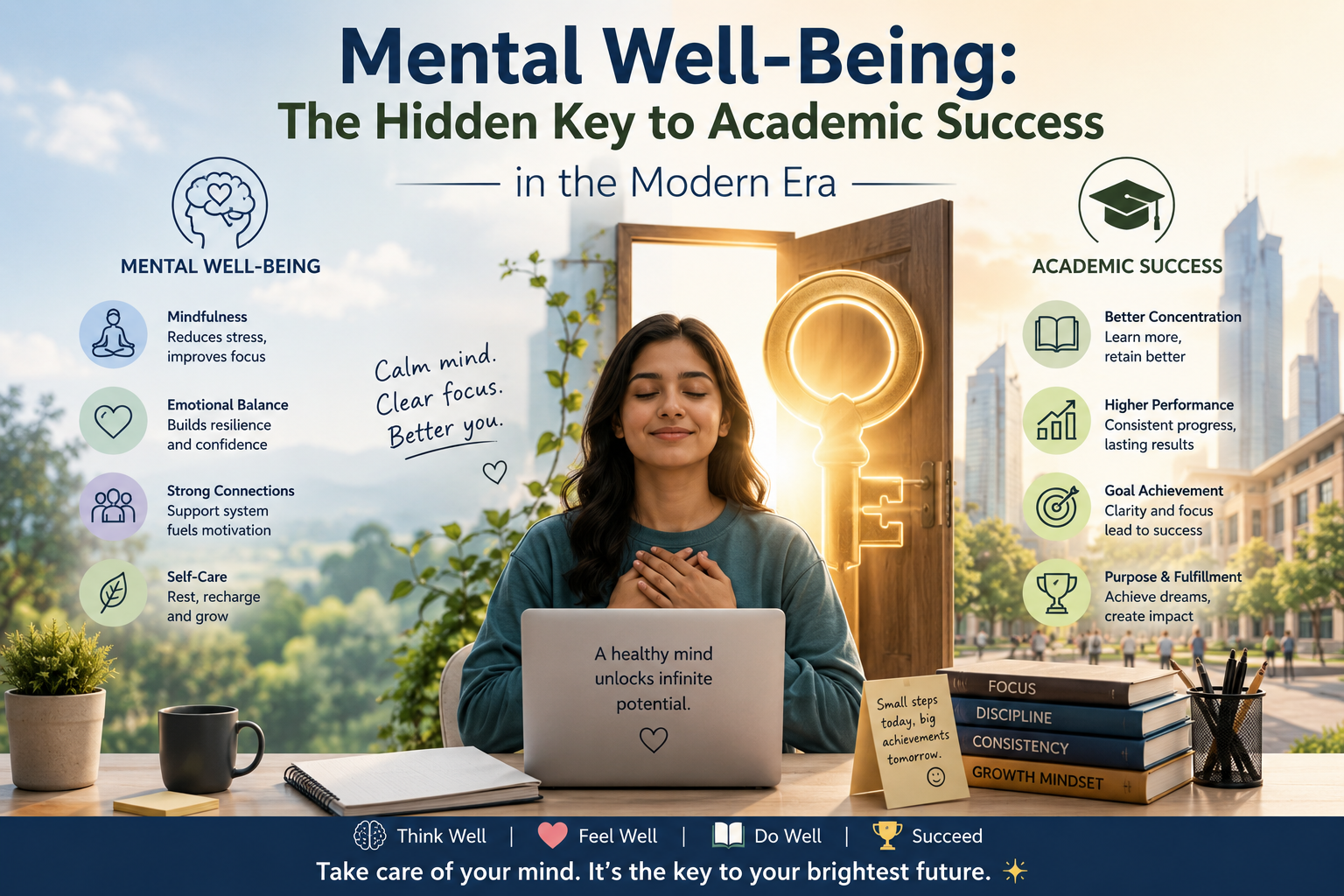

In today’s competitive world, students are constantly striving for academic excellence. Good grades, entrance examinations, scholarships, and career opportunities often become the primary focus of their lives. However, amid this race for success, one crucial factor is frequently ignored: mental well-being. A healthy mind is just as important as hard work and intelligence. In fact, mental well-being acts as the foundation upon which academic success is built.
Mental well-being refers to a person’s emotional, psychological, and social health. It influences how students think, learn, handle stress, and interact with others. When students feel mentally healthy, they can concentrate better, remain motivated, and perform effectively in academics. On the contrary, poor mental health can negatively affect learning, memory, and overall academic achievement.
The importance of mental well-being among students has become more evident in recent years. According to the World Health Organization (WHO), one in seven adolescents aged between 10 years and 19 years experiences a mental health disorder, making mental health one of the most significant challenges faced by young people today. Depression, anxiety, and behavioral disorders are among the leading causes of illness and disability in this age group.
The modern educational environment places enormous pressure on students. Competitive examinations such as JEE, NEET, UPSC, SAT, and other entrance tests demand long hours of study and constant performance. Many students feel overwhelmed by parental expectations and societal pressure. As a result, stress and anxiety have become common companions in student life.
A real-life example can be seen during board examination seasons in India. Every year, counseling helplines receive thousands of calls from students experiencing examination stress and fear of failure. Similarly, after the COVID-19 pandemic, many students reported difficulties in concentration, loneliness, and lack of motivation due to prolonged online learning and social isolation.
Mental well-being directly impacts academic performance. Students suffering from anxiety often find it difficult to focus during lectures or examinations. WHO reports that anxiety and depressive disorders can significantly affect school attendance and academic work. Students may miss classes, avoid participation, or struggle to complete assignments on time.
Another major challenge of the present era is excessive use of social media. Platforms such as Instagram, Snapchat, and TikTok have transformed the way young people communicate. While these platforms provide opportunities for learning and connection, they also create unhealthy comparisons and unrealistic expectations. A WHO report found that problematic social media use among adolescents increased from 7% in 2018 to 11% in 2022, indicating growing concerns about its impact on mental health.
For example, many students compare their academic achievements, lifestyles, or appearances with others online. This comparison often leads to feelings of inadequacy, low self-esteem, and anxiety. Instead of focusing on personal growth, students may become trapped in a cycle of comparison and self-doubt.
Despite these challenges, there are inspiring examples of how mental well-being contributes to academic success. During the Paris 2024 Olympic cycle, several athletes openly discussed the importance of mental health alongside physical training. Their stories highlighted that success is not merely about talent but also about emotional resilience. Similarly, many top universities worldwide, including institutions in India, the United States, and the United Kingdom, have expanded counseling services and wellness programs to support students’ mental health.
Sleep is another often overlooked factor linked to both mental well-being and academic achievement. Many students sacrifice sleep to study longer hours before examinations. However, scientific research consistently shows that adequate sleep improves memory retention, concentration, and emotional regulation. A well-rested student is more productive and learns more effectively than one who studies throughout the night.
Physical activity also plays a vital role in maintaining mental health. Regular exercise releases endorphins, often called “feel-good hormones,” which reduce stress and improve mood. Even simple activities such as walking, cycling, yoga, or playing sports can enhance concentration and academic performance.
Parents and teachers have an equally important role in promoting mental well-being. Instead of focusing solely on marks and rankings, they should encourage effort, creativity, and personal growth. A supportive environment where students can openly discuss their concerns helps reduce stress and build confidence. Educational institutions can further support students by organizing mental health awareness programs, counseling sessions, and stress management workshops.
Students themselves must learn healthy coping strategies. Time management, mindfulness, meditation, regular breaks, and maintaining strong social connections can significantly improve emotional well-being. Seeking help from counselors or trusted adults should be viewed as a sign of strength rather than weakness.
The economic and social benefits of supporting student mental health are also substantial. WHO estimates that every dollar invested in adolescent mental health can generate a return of about 24 dollars over the long term through improved health, education, and productivity outcomes.
In conclusion, mental well-being is not separate from academic success; it is one of its strongest pillars. In an age characterized by intense competition, digital distractions, and growing academic pressure, maintaining mental health has become more important than ever. Students who nurture their mental well-being are better equipped to learn, adapt, innovate, and succeed. As the saying goes, “A healthy mind is the greatest classroom.” By prioritizing mental well-being alongside academic achievement, we can create a generation of learners who are not only successful but also resilient, confident, and prepared for the challenges of the future.